Pages

Monday, 26 March 2018

Academic Archaeology: what not to wear

"Do you only ever wear black?"

Now there's a question I hadn't been asked since I was about 17. Don't know. Hadn't really thought about it. The months of summer bring a world of archaeological fieldwork and the assorted muted greys, greens and khaki colours of combat-dig-wear, but full on winter-lecture mode....?

"Er"

Strange question for a student to ask.

When I first started in academia, some 25 years ago now, the university-powers-that-be did attempt (briefly) to enforce a dress code on their staff - something about lecturers having to regularly look smarter (at least in clothing choice) than their students (so that the two tribes could, perhaps, be more easily distinguished). Some hope. I did once toy (very briefly) with the concept of jackets / shirts / ties / waistcoats. Silly idea. Not me at all.

In the world of pop culture archaeological academia, of course, as I've noted before, we've got the great Dr Jones as a role model, slipping effortlessly from the monotonous world of chalk and talk, where tweed and sensible ties rule supreme


to the battered leather jacket and fedora prefered when looting (sorry, conducting serious archaeological fieldwork)


There are no hard and fast dress codes when it comes to real world archaeo-academia though (as a glimpse at any university archaeology undergraduate programme will no doubt amply demonstrate). There was a time when (I think) I did wear colours (albeit mostly baby sick and food stains) but dark clothing does help one to blend into the gloom of a poorly lit lecture theatre just as khaki, I guess, helps the avid archaeo-practitioner blend into the dusty fields surrounding the average dig (perhaps archaeologists simply don't want to be seen?).

Many years ago, when I first dipped my toe in the world of televisual archaeology, a producer in the know told me that, if I wanted to work full time in TV (which, at the time, I wasn't really convinced that I did) I needed to be noticed. "Get a distinctive personality trait" he advised, "something that gets you remembered. Better still" he went on "dye your hair, get a tattoo or some form of prominent facial piercing. Even better than that" he grinned "wear brightly coloured or hideously mismatched clothing. In short, you need to stand out from the crowd".

Having not gone to art school (and having already completed my undergraduate experiments in clothing - all best forgotten) I remained stubbornly unmemorable and dressed as myself, contrary to the advice given.

Over the last couple of months, as I gorge on my daily lunchtime diet of Bargain Hunt (don't worry, I do still have a job), I can't help but notice that this advice is, apparently, still being given (and actually being heeded by those in the auction-related world). All it takes for experts to be remembered (and re-employed) is to create a TV persona based on distinctively memorable clothing. Hence there's the distinctive, brightly coloured scarf:


the distinctive, brightly coloured hat:


the distinctive scarf and hat:


the distinctive trousers:


the distinctive blazer:


and, most memorable of all, the distinctive hat, scarf, bow tie, coat and facial hair combo:


In comparison with this, how can the average real world archaeologist compete?


Dark (unmemorable) colours for clothing then it must remain for me...at least until I fade and become part of the archaeology myself.


Wednesday, 28 February 2018

Folking Beaker People

I was very pleased to see the news headlines last week that a new study of prehistoric DNA appears to suggest that "at least 90% of the ancestry of Britons was replaced by a wave of migrants who arrived about 4,500 years ago" [the Guardian]. 


In the earlier 20th century, it used to be thought that 'Beaker pottery' represented a particular type of artefact belonging to an aggressive, colonising people who swept across Europe from the east bringing knowledge of metalworking with them: hence reference in the contemporary archaeological literature of the ‘Beaker Folk’.When I was at university (a few centuries ago now) we were told that such ideas concerning prehistoric migration and invasion were simply wrong - there was no such thing as 'the Beaker People' (and even the term 'Beaker-using-people' should be avoided if at all possible). 


Using a traditional approach to archaeological artefacts, of course, it is easy to argue that Beaker assemblages are the physical manifestation of a specific ethnic group, and most early attempts at explaining cultural change interpreted the arrival such material in terms of an invasion or folk migration. The invasion hypothesis was very popular in the years leading up to the Second World War and archaeological maps drawn throughout the 1930s, purporting to show the distribution of Beakers and the spread of metalworking across Europe, look instead as if they are plotting carefully planned military advances. Directional arrows became the march of armoured regiments. Artefacts were weapons. Site names became battlefields.


This view of aggressive acculturation underwent a gradual process of revision throughout the 1960s and ‘70s. The ‘New Archaeologies’ that evolved during that period stepped away from the invasion hypothesis, which appeared to provide a rather simplistic take on the evidence, and progressively replaced it with ever more subtle concepts. The arrival of Beakers and metalwork, it was argued, was due to a more passive form of cultural change. To put it simply, it was suggested that people altered their lifestyles through choice, and not because they were forced to. Change, it was argued, occurred through peaceful social interaction, such as trade. There was no need to explain the Beaker phenomenon in terms of war, migration or conquest.

Never being entirely convinced by all this, I did argue (in the books Monuments of the British Neolithic, The Early Neolithic Architecture of the South Downs and Prehistoric Sussex) that the so-called Beaker package "could easily (and quite plausibly) represent the archaeological trace of an invasion or migration – the durable remains of a small, militarily strong social group that replaced the social elite in a given area, taking ultimate control of local resources". This point (in particular) received a barrage of criticism in the reviews that followed, one writer (who still works in archaeology) describing the argument as "complete nonsense" - little more than "meaningless posturing" whilst another noted that they were "writhing in annoyance at the crass images drawn" and hoped that both myself and my books would "soon be forgotten".

At the time, such 'reviews' left me depressed and angry, not least of all because it was clear that those writing the comments appeared to have wilfully misunderstood large sections of the books condemning the conclusions as they went against their own (wholly subjective) point of view. Today, with the considerable benefit of hindsight, I've learnt to recognise that if I'm annoying people quite this much then I must, after all, be doing something right.

The news that the Beaker phenomenon could indeed have been the result of prehistoric mass migration and invasion, the degree of population replacement involved being far higher than anyone could have imagined, has pleased me inordinately.


Even taking the hyperbole that always surrounds archaeological discoveries (especially when reported in the popular press), I do sincerely hope that the academics who have long argued against the idea of population movement being the catalyst for cultural change are now chewing on their crayons in frustration.

Now, if you'll excuse me I'm off for a spot of meaningless posturing...

Friday, 22 December 2017

Michael Wood and John Romer: a slight case of hero worship

They say you should never meet your heroes (actually, that has indeed proved true in at least five cases in my own experience - which I won't go into detail here - at least not till I've finished the Christmas sherry), but I'm pleased to report that, at the BBC History weekends this winter in Winchester and York, I met two of my own personal archaeo-historic heroes, Michael Wood and John Romer, and was very glad that I did.

Michael has written and presented many TV programmes, but it was his In Search of series, covering the Dark Ages. which first aired on the BBC between 1979 and 81, that first really got me interested in archaeology as a subject of mass appeal, coming, as it did, as a beacon of televisual light during the dark days of school (and the dismal round of results that proved to be my O Levels). 


John wrote and presented Romer's Egypt, which ran on the beeb at the same time and, although I've never followed Egyptology closely, I found his series similarly captivating and enthralling.


Perhaps it was the formative time of my life that I first watched these programmes, and repeatedly rewatched them (as my family owned an early VHS recording system which allowed me to tape these TV gems on a large, brick-shaped video cassette) but I feel that they represent the pinnacle of archaeological programming on the BBC. Yes, there are certainly more TV programmes covering archaeology and history today than in the early 1980s, but, watching them all (which I do) it feels that today's output can sometimes (although by no means always) be lightweight, breezy and intellectually unrewarding. 

True, presenters have become more professional and special effects far more flashy and dramatic, but today's content often feels either absent or completely watered down and I frequently get the feeling that I'm being talked down to. In rewatching both Romer and Wood (I now own remastered copies of their series on DVD, the VHS cassettes being almost completely unplayable, although they're probably invaluable museum pieces) you never get such a worrying sense. Here, in these early series, you are in the hands of capable and enthusiastic communicators who really know their respective subject areas. They never 'dumb-down' in order to pass on their hard-won knowledge. They never play tricks to the camera. They never patronise.

Meeting both was a joy, reminding me of why I wanted to get into archaeology in the first place, namely research, discovery and communication. It's been a difficult year, career-wise, and I've had moments where I've wondered whether it's all really been worthwhile, but meeting these two and sitting in their lectures afterwards, I was transported back to simpler times when the idea of studying the past seemed to be a glorious and exciting thing to do. 

Faith restored.


Thursday, 14 December 2017

Archaeology, Star Wars and the Power of Memory

So, I've just seen Star Wars: the Last Jedi [no spoilers - don't worry] and whilst I understand that it's not to everyone's taste (personally I can't see the attraction of The Lord of the Rings, but that's another story and, indeed, another franchise), may I just say 'WOOHOO' punch the air with joy and get all that out of the way.

Where was I again?

Oh yes, it got me thinking about the way memory works...


As an archaeologist, memories are my staple, my raison d'etre, my reason to be; spending my life finding, sorting and sifting through the accumulated mental detritus of past millennia. In fact, to quote another element of pop culture of which I'm inordinately fond, MacKenzie Crook's wonderful series Detectorists:


"we unearth the scattered memories. Mine for stories" - indeed yes

Memories are tricky things though. Hugely subjective, always different (depending on who is doing the remembering) and constantly shifting with time. I guess that's why, to return to the Star Wars analogy (thank you) the recent three films (Force Awakens, Rogue One, Last Jedi) have proved so popular at the box office and with fans (myself included) - yes they play with memories, but they do so in an affectionate and really rather clever way - taking bits of music and dialogue here, set and space ship designs there, to create something familar, comforting and yet ever-so-slightly new and exciting. 

Repeating the past, only making it more so (if that makes sense). 

That's why (in my own humble opinion) the first 3 prequels (Phantom Menace, Attack of the Clones, Revenge of the Sith - and, if you want to be totally completist and pedantic the Clone Wars too) went badly awry, being so out of kilter, po-faced and (dare I say it) rather dull, they took the memories of the first 3 films and cheerfully defecated all over them 


Of course, the advance of special effects meant that, never one to leave well alone, director and creator George Lucas subsequently went on to tinker, add, delete, move around and generally mess with the 1977-83 originals, so that the versions we see on TV today bear only a passing resemblance to the big screen originals from back in the day


I was discussing this very point with some of my colleagues at work (sometimes we talk about archaeology too). They were convinced (and really quite adamant) that the 1977 film Star Wars had always been Star Wars: A New Hope and had similarly always been credited as 'Episode IV'


I wasn't so sure. I do vividly recall seeing the film on its second run in 1978 (3 times in 3 birthday party treats for 3 friends over 3 days). I remember the screen crawl, I remember the first shot of deep space, I remember the awe-inspiringly big space ships that filled the screen so dramatically and the first epic battle that launched a franchise...


...I do not remember 'Episode IV' appearing anywhere (in fact if it had I think we would all have been asking ourselves what the hell happened to episodes I to III and demanding our money  back - not that it was our money paying for the cinema tickets back then). 

It took a quick google check (what did we do before the internet - other than read books - obvs) to discover that the title Episode IV : a New Hope wasn't actually added until 1981, when the idea of retro-fitting prequels was first mooted. 

The film I saw in 1978 was called Star Wars...


...end of.

Hence, in respect, and recalling that old pop-culture statement of sci-fi rejection 'I've Never Seen Star Wars' - it follows that anyone who saw the first of George Lucas' movies (set in a Galaxy far far away) in 1981 or after hasn't actually seen Star Wars at all.
No, what they've seen is a film called A New Hope


George Lucas is a man who is clearly unhappy with memory recall and has, since the early 1980s. been doing his level best to keep messing with our minds. Sad though it is to say, if stories are to be believed, the original cuts for films 1-3 (or episodes IV-VI in the brave New Order - or is that First Order? - of things) have been deleted, so as to enforce the legitimacy of the shiny new editions. Of course, that hasn't stopped fans from trying to recreate the original versions from what they remember and from what little has survived, but that's not the same as having the originals themselves (and it's also playing fast and loose with our poor scattered memories).

As a consequence of all this, I find myself in even more difficulty when I'm working on site for, when I recover an artefact that hasn't seen the light of day for hundreds, if not thousands, of years - something that meant something to someone long long ago - whilst I am indeed overjoyed to be recovering a scattered memory, I am also perplexed as to whose memory it was, what it ultimately means, what version of the memory it is and, most important of all, whether or not it's real or has been subtly re-rendered in CGI 


Sunday, 14 May 2017

A Song for the Durotriges

It begins - the annual competition in which (most of) Europe gathers together in order to showcase the finest songs in the hope that one will be chosen to be the Durotriges 'Big Dig’ anthem. The misguided, misinformed and foolish think that this is 'the Eurovision Song Contest', but we in the know are aware of the truth. The winner in the televised version of Eurovision may get to take home a glass trophy in the shape of a rectal camera


but the winner of the Durotrigian popular vote has the satisfaction of knowing that their song will be played loudly (and constantly) in the site minibus and tannoy system every morning from now until August in order to motivate, inspire and (just possibly) infuriate. The dig season is starting – now let’s find an anthem.

This year the choice has been more difficult than usual, not because of the poverty of songs (thank you 2016) but because there have been so many gloriously insane entries, any one of one of which could easily have taken the prize. This, coupled with the fact that the entire stage was designed to make every contestant look as if they were performing beneath a giant set of squatting buttocks


and the final decision was difficult; very difficult indeed.

Would it be the hair-whipping Montenegrin whose 'Spaceship was ready to blow'  despite the fact that his 'Linen is covered with feathers'?


Would it be the Italian caught on stage by an amorous Gorilla?


Or the mooning Austrian?


The funky Moldovans?


The Brexit-apologising UK entry?


The schizophrenic Croatian opera singer turned soprano-biker in love with himself?


The 'can't quite stand up' (and utterly unpronounceable) O'G3NE from the Netherlands?


The super sinister scary JOWST from Norway (who could not only hear voices in his head but whose chorus seemed to be the less than jolly mantra 'Kill Kill Kill')?


The five men from Sweden in desperate need of a functioning public toilet?


Or the clearly Durotrigian crowd-pleasing Dihaj from Azerbaijan who sang about skeletons whilst performing with a horse head human hybrid man on an archaeological photographic step ladder?


Tough choice.

In the end, of course, although both the official Eurovision jury and public vote went for socially awkward Salvador Sobral from Portugal


there could only be one winner of the Durotriges Big Dig 2017 Anthem prize. 

Hello Europe, this is Bournemouth calling. The votes of the Dorset jury are in and all bribes have now been cashed. 12 points go to the Romanian entry 'Yodel it' by Ilinca and Alex, a beautifully crafted ballad detailing the benefits of the UK-based parcel delivery service complete with guttural throat exercises, glitter-cannons and eastern European rap


Brilliant - quite quite brilliant. From this moment, the peace of the Dorset countryside will be broken each and every morning with a prime slab of yodel-based-rapping. What better way to inspire the dig team?

Thank you Kiev, thank you Europe and goodnight...


Friday, 28 April 2017

Signs of Life 3

It's that time of year again when lectures, meetings, fieldtrips, seminars, more meetings, exam briefings and assignment marking join together with even more meetings to create a perfect storm of timetable-related-brain-congestion from which it is difficult to escape. Occasionally the well-researched student assignment or well-argued question in the middle of a lecture provides a 'Eureka' moment that makes all the hours lost in mindless-meeting-related drudgery worthwhile. Sometimes it is a confused headline news story glimpsed for a moment in a TV bulletin makes you stop in your tracks and wake up.

This time it's the BBC News page that does the trick:  


Not being a follower of football (have I said that before?) it took a long time for me to realise this wasn't a piece of fake news or late April Foolery - especially as people have been saying for many years that Jesus Saves...


Sunday, 23 April 2017

The Archaeology of Doctor Who 4

Ok (bit weird) but less than 2 weeks on from wondering whether BBC Dr Who show runner Steven Moffat had taken a peek at my own private Who-related wish list, putting so many archaeologists (and not the usual, run-of-the-mill evil / dysfunctional / curse-invoking type that pop culture relentlessly throws at us) into his flagship programme, together with multiple depictions of Roman soldiers AND Stonehenge, this week, in an episode entitled Smile (which as several people have pointed out to me is an anagram of Miles - just in case my completely delusional egocentric worldview wasn't warped enough already, thank you) featured the geeky spot to end all geeky spots...

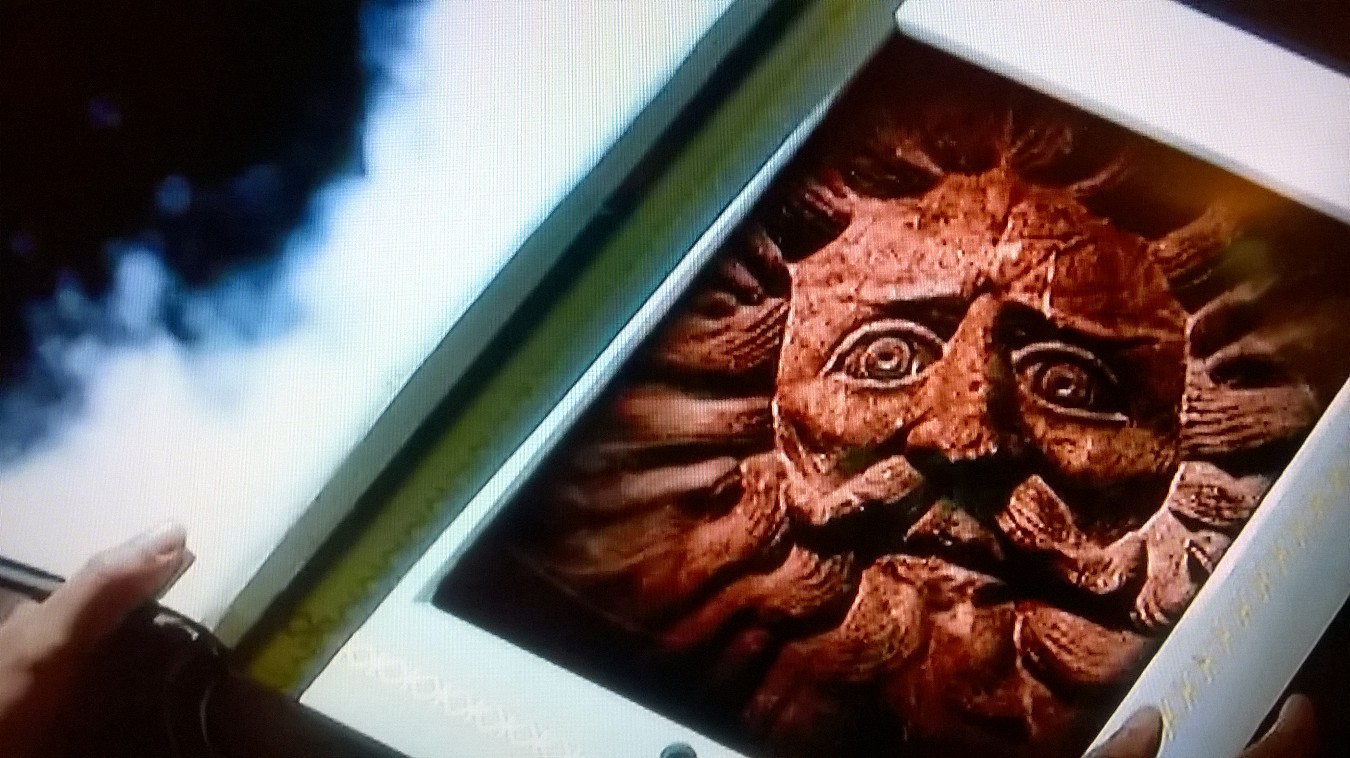
...for, a mere 18 minutes in, as Bill, the Doctor's new companion, searched through the archive of a post earth-evacuation colonist ark, she accessed images and information relating to humanity's great artistic achievements and there, sitting squarely among Stonehenge and Easter Island was an image of the Venus mosaic from Bignor Roman villa in West Sussex. 


I recognised it straight away, why wouldn't I, it is after all a mosaic I'm very familiar with


having, quite literally, together with my friend David Rudling, written the book on it (which is currently available from all good (and probably some less good) bookshops)


Wow (and I repeat) wow. Of all the mosaics in all the world (etc etc). This, coupled with an image of the Medusa / Gorgon head from Bath


and I had to have a bit of a lie down


What with the Ninth Hispana Legion coming up in a few weeks time (seriously), all I need to make my delusional mindset come into less focus would be an episode set completely in the galleries of a Neolithic flint mine...now that would be a bit weird (not to say very unlikely) wouldn't it.

Anyway, all things considered, I am very pleased to see that, not only is the past valued in the future, but it's a very archaeo-centred Bournemouth University Research Project version of the past (if we count Bignor, Bath, Easter Island, Stonehenge and the forensic analysis of human remains)..

...cue happy emoji-robot-interface face


Thursday, 13 April 2017

The Archaeology of Doctor Who 3

I'm a big fan of Dr Who (did I mention that before?) and, as the new series is about to air on the BBC (the last to feature Peter Capaldi as Doctor 12/13/1st of the second phase/indeterminate - delete as applicable) I am beginning to wonder whether show runner Steven Moffat has taken a peek at my own private Who-related wish list.


I have, of course, had this feeling before.

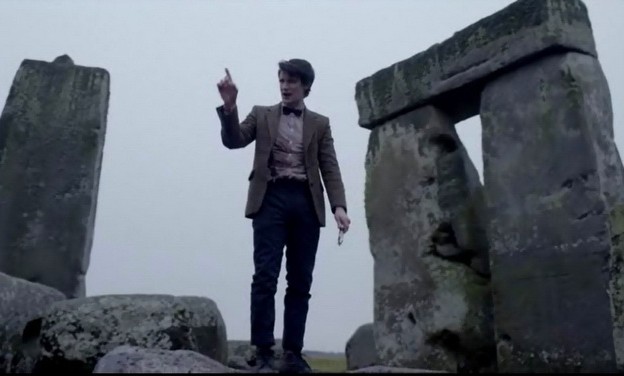
The series 5 finale (in 2005, rather than the season 5 finale in 1968) The Pandorica Opens / The Big Bang, for example, was set almost entirely within one of my favourite examples of prehistoric architecture: Stonehenge 


Not only that, of course, but it also featured [spoiler alert] Cybermen, Daleks and the trowel-bothering, gun-toting, banana-wielding exo-archaeologist Professor River Song


It also had, quite inexplicably, Roman legionaries


Lots and lots of Roman legionaries


and, OK so the legionaries all turned out to be [Spoiler Alert] Nestene Duplicates (rather than Autons - no, me neither), but the combination of Romans and Stonehenge made this particular lecturer in Prehistoric and Roman archaeology a very (very) happy man. So happy, in fact, that I think I'll say that again: Roman soldiers AND Stonehenge.


Wow

Even better, just like myself, the good Doctor and his chums immediately went mucking around in the ground around the sarsens. OK, so my particular 'mucking around' was part of a properly managed archaeological research programme (rather than a search for an extraterrestrial thingymabob), but I did feel a strange kind of kinship


- it being about as close as I'll ever get to sharing the same experiences as the good Doctor. What particularly made me sit up and take notice (even more than I was already) was when Team-Who found a secret way down into the ground within Stonehenge. 


At this point I remember thinking 'that looks very familiar...' and in a way it was, my very own 'photo from the trenches' appearing as a cover image on Current Archaeology magazine a few months previously.


Perhaps, I wondered, if only we'd dug a bit deeper at the site, we too could have found and opened the Pandorica (although I suspect we wouldn't have made such a good job of the overall recording).

Reading this week's Radio Times (other TV listing magazines are available) detailing the upcoming 2017 series 


I see that [Spoiler Alert] episode 10, entitled "The Eaters of Light" (by Rona Munro) is described in the following terms:

"A long time ago, the Roman legion of the ninth vanished into the mists of Scotland. Bill has a theory about what happened, and the Doctor has a time machine. But when they arrive in ancient Aberdeenshire, what they find is a far greater threat than any army. In a cairn, on a hillside, is a doorway leading to the end of the world"


Do excuse me, I think I need to lie down in a darkened room for around 10 weeks....see you in June.